Building value since 1869
E.A. Smith has been in continuous operation since 1869. More than 150 years of experience have shaped the company into what it is today: a knowledge-driven, customer-oriented group with deep roots in the construction, steel, and building materials industries. The strong relationships and networks built over generations remain one of the most important assets and a testament to the company’s resilience, adaptability, and long-term perspective.
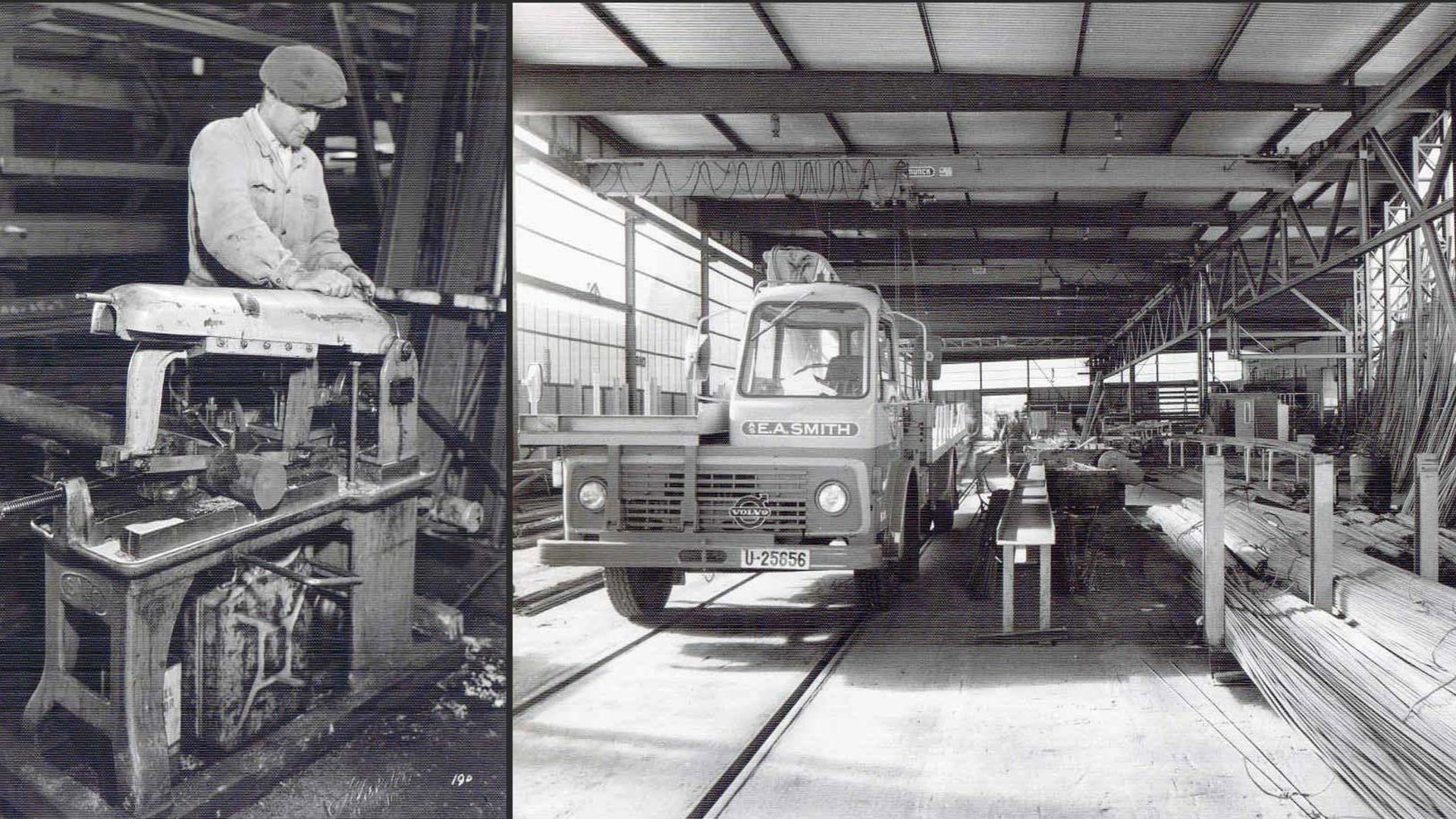
1869 - The foundation
E.A. Smith is founded by 27‑year‑old teacher and trade associate from Bærum, Elias Anton Smith. On June 10, he is granted his trading licence by the magistrate in Trondheim. The business is established with iron, hardware, oils and pigments, cement, and coal for blacksmiths as its main product groups.
Within a year the company relocates to Munkegaten 39 at Ravnkloa and acquires several neighbouring properties. Warehouse facilities are established on the pier across the street at Fjordgaten 82. The experienced iron merchant, Christian Thaulow, also resides at Ravnkloa, and the area soon develops into a centre for the trade of iron and building materials in Mid‑Norway. The company experiences strong growth in both turnover and number of employees in the years that follow.
1912 - The company is reorganised
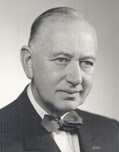
Founder Elias Anton Smith is struck by severe illness. Despite challenging circumstances, the family decides to continue operations. Lorentz Cappelen Smith, the youngest of ten siblings, returns from Berlin, where the 22‑year‑old has just begun his career as a diplomat at the Norwegian legation, to take on responsibility for the company.
Lorentz Cappelen Smith demonstrates strong business acumen by reducing the product range and discontinuing all retail activities. The company is reorganised as a limited liability company. From 1914, A/S E.A. Smith operates exclusively as a wholesale business. Lorentz’s mother, Ingeborg Anna Røvig Smith, is appointed Chair of the Board.
1917 - The first subsidiary
The company establishes its first subsidiary in 1917, E.A. Smiths Jernlager AS, in Kristiansund, with offices and warehouse facilities at Storkaia 6. The property is later acquired by the company.
Lorentz Cappelen Smith is appointed Swedish Consul for Møre og Romsdal, the city of Trondheim, and the Trøndelag counties.
1927 - Majority shareholder
A/S E.A. Smith becomes the majority shareholder, and later sole owner, of Nordisk Metalaktieselskab, including representation for Svenska Metalverken in Västerås. The company acquires warehouse facilities from A/S Verdalsbruget at Brattøra, as well as neighbouring properties, which are developed into the company’s main warehouse.
1940 - The Second World War
Kristiansund is subjected to heavy bombing, and the company’s head office at Storkaia 6 is completely destroyed. New modern facilities are built on the site after the war and are taken into use in 1947.
The Second World War becomes an extremely difficult period for the company. During the German state of emergency, Lorentz Cappelen Smith is among those scheduled for arrest and execution in 1942. By coincidence, he is travelling to Oslo when the state of emergency is declared and avoids execution. He is later arrested and imprisoned at Grini prison camp until 1944.
To meet the significant demands arising from the reconstruction of Northern Norway after the war, A/S E.A. Smiths Jernlager is established in Harstad in 1946.
1953 - Attracts international attention
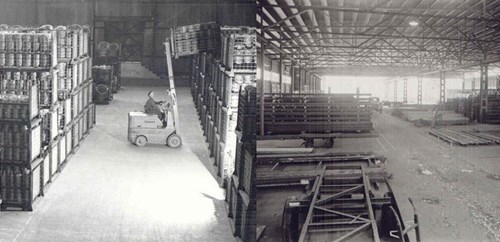
A new, highly modern steel warehouse is opened at Ila Pier in Trondheim. The company leases 4,500 square metres of land from the Trondheim Harbour Authority.
The new warehouse attracts international attention. Representatives from Italy’s largest iron and steel company, Paolo Morassutti, visit E.A. Smith AS in 1957. According to American experts, the technical standard of the Ila Pier warehouse is described as unparalleled in Europe and the United States at the time.
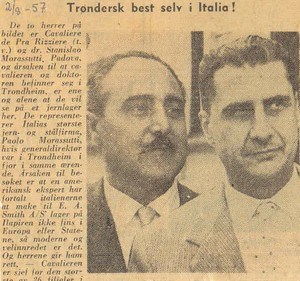
Facsimile from Adresseavisen 2/8-1957:
1967
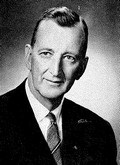
Two years before the company’s centenary, Lorentz Cappelen Smith passes away. During his 55 years as CEO, he has developed E.A. Smith into a leading industrial and commercial enterprise in Norway. He is succeeded by his eldest son, Elias Anton Cappelen Smith, who has also served as Swedish Consul since 1959.
A second major steel warehouse, Ila II, is constructed, increasing total storage capacity in the Trondheim harbour area to 14,000 square metres.
1969 - 100th anniversary
A/S E.A. Smith celebrates its 100th anniversary.
In the 1970s the digital age is setting in. E.A. Smith combined strong geographic expansion with early digitalisation and organisational development. The company introduced electronic data processing (EDP) for accounting, warehouse management, order handling, and invoicing in cooperation with Nor Data, in which E.A. Smith also held an ownership interest. New departments were established across Northern and Western Norway, strengthening the company’s national presence.
During this decade, the E.A. Smith Foundation was established, leadership transitioned from E.A. Cappelen Smith to Per Cappelen Smith, and warehouse, logistics, and steel operations were expanded through new facilities and strategic partnerships within steel processing and distribution.
Nor-Data was renamed EDB Business Partner in the 2000s, and the company is now a part of TietoEVRY.
Nordisk Metal A/S moves out of the old Smith-pier at Ravnkloa in 1975, and into temporary warehouses and offices at Tempeveien. The company builds new warehouses for ship plates in Øysand and enters a strategic partnership with Ila Jern A/S for slinging and cutting.
1982 - Relocates and reorganises
The warehouses at Brattøra are sold to the Trondheim Port Authority. E.A. Smith acquires 24 acres of land at Heggstadmoen, south of Heimdal, and relocates ship plate storage from Øysand to Heimdal.
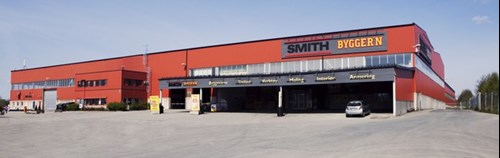
Construction and steel operations are reorganised as separate companies in 1986. A/S E.A. Smith becomes the parent company with central administrative responsibility. Office buildings and modern warehouse facilities are developed at Heimdal, and Nordisk Metal A/S is relocated from Tempeveien. E.A. Smith establishes its own data center and discontinues external data service rentals from Nor-Data A/S.
The same year Per Cappelen Smith resigns as CEO after leading the company through a consolidation phase following the strong growth of the early 1970s. He also oversaw a major corporate reorganisation and development at Heimdal.
Jarle Lysklett, MSc in Economics and Business Administration, is appointed as the first CEO not related to the Cappelen family.
1988 - New Chairman
Fjordgaten 82, known as the “Smith Pier”, is sold. Trond R. Reinertsen, the nephew of the owners, becomes a member of the Board.
Two years later, E.A. Cappelen Smith steps down from the board, and Per Cappelen Smith is appointed as the new Chairman.
1991 - Bygger'n chain is established
E.A. Smith consolidates its operations in Trondheim into two main locations. After more than 120 years at Ravnkloa, the company relocates its head office to new, modern facilities at Heimdal. Nordisk Metal AS moves its operations to Ila Pier, where activities are coordinated with E.A. Smith Stål AS.
A new joint office building has been constructed for the two companies, closely integrated with the warehouse facilities. Today, this forms one of the largest and most comprehensive steel and metals centres in Norway.
E.A. Smith Bygg AS utilises the entire modern storage facility at Heimdal as its primary logistics base for building materials, timber, and reinforcing steel.
The Bygger’n chain is established, comprising 22 stores across Mid- and Northern Norway.
Sales and marketing organisation is divided into two divisions 1993. A division for building materials/lumber with E.A. Smith Bygg AS as divisional manager, and a division of steel/metals with shared responsibility between E.A Smith Stål and Nordisk Metal AS.
The unification of our main steel and metals companies is completed by establishing E.A. Smith Stål og Metall AS through a merger between E.A. Smith Stål AS and Nordisk Metal AS in 1994.
1995
E.A. Smith strengthens its position in reinforcing steel through the acquisition of Fundia’s rebar department in Trondheim, subsequently relocating operations to Heimdal.
Following a major fire at the Heimdal warehouse, reconstruction is completed within six months, and a new facility is finalized in the summer of 1996.
E.A. Smith Bygg AS expands its offering through the acquisition of tool wholesaler Nerdahl & Co. AS, and relocate to new facilities at Heimdal.
Trond R. Reinertsen is appointed Chairman following Per Cappelen Smith in 1996.
In May, Consul Elias A. Cappelen Smith passes away, having held several key roles in the company since 1937, including CEO from 1967 to 1975 and Chairman until 1990.
The Bygger'n chain becomes a nationwide chain in cooperation with L.A. Lund. Bygger'n Norway AS is established as the main office.
1998
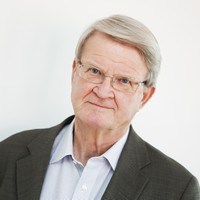
Trond R. Reinertsen is appointed CEO while continuing as Chairman of the Board.
The steel business continues its operations in Breivika. E.A. Smith acquires Rieber Stål’s steel division in Bergen, strengthening its position in the steel market.
2000
In the early 2000s, E.A. Smith continues to expand its operations through alliances, acquisitions, and the establishment of new departments. Steel activities in western Norway are consolidated through a strategic partnership, while the Bygger’n chain grows through new establishments, relocations, and acquisitions. Ownership structures within Bygger’n are adjusted, and reinforcing steel production is further developed.
In 2002, HIBA Hus becomes a wholly owned part of E.A. Smith, strengthening the company’s position within housing, cabins, and garage concepts.
L.A. Lund exits its partnership with E.A. Smith and the Bygger'n chain. In addition, they discontinue their ownership in Bygger'n Vest Hiba and Bygger'n Norway AS, which is now 100% owned by Smith.
A partnership agreement is signed with Løvenskiold in 2002.
During this period, E.A. Smith strengthens its position as a national supplier of both building materials and steel.
In 2010, the company completes a major restructuring by merging most wholly owned subsidiaries into the parent company, simplifying the corporate structure while operations continue as independent departments.
2011 -
E.A. Smith continues to grow through selective acquisitions of properties and operations, further strengthening its regional and industrial footprint. Reinforcing steel production and logistics are adapted to improve efficiency, and new facilities are brought into operation.
Despite challenging market conditions, including losses related to oil‑related investments, the company improves profitability and continues to invest in long‑term development and modern infrastructure.
2016 - New CEO
Trond Reinertsen steps down as CEO and is succeeded by Arne Reinertsen.
E.A. Smith invests in Lindal Treindustri in 2017, and a new cleaning and priming facility is installed in Holmestrand.
A new, user‑friendly e‑commerce platform is launched for the Bygger’n chain.
Smith Stål takes over a 13,000 m² port area at Horten Harbour.During its 150th anniversary year, E.A. Smith acquires several more departments, and the first pre‑cut saw is installed at Storås in 2019.
2020 - Covid and HEIM Boligsystem
The COVID‑19 pandemic leads to a global recession and heightened uncertainty early in the year. Nevertheless, strong performance in the consumer segment results in record revenue.
E.A. Smith acquires Lindal Treindustri, Ljøstad Bygg, and Handelshuset Lom, and makes significant investments in technology.
In 2021, E.A. Smith further develops its housing activities by establishing HEIM Boligsystem, building on the experience and structure of the former HIBA Hus concept. HEIM Boligsystem is developed as a comprehensive housing and building concept, combining architectural services, systemized solutions, and project support for residential construction.
The concept is closely integrated with E.A. Smith’s value chain, drawing on expertise from Bygger’n, Smith Stål, and Smith Byggesystemer to provide efficient, coordinated solutions for both individual homes and larger residential projects.
E.A. Smith delivers strong financial results despite the pandemic and significant market volatility and carries out its largest technology investments to date. A new cloud‑based ERP platform has been established. Systematic initiatives within health and safety, environmental management, and certifications are launched.
2022
A new cloud‑based technology platform has been implemented, and E.A. Smith achieves significant revenue and EBITDA despite high market volatility. The Transparency Act enters into force and is implemented throughout the company.
Digital commerce, integrated systems, and automation are further developed. Sustainability initiatives are strengthened through Miljøfyrtårn and ISO certification work.
Market conditions are characterised by reduced activity in the construction industry. E.A. Smith makes necessary adjustments while maintaining a strong local presence. The ERP and technology platform are further developed.
Reinforcing steel operations are relocated from Tranby to Holmestrand.
2024 - Smith Byggesystemer
Building systems operations within E.A. Smith are developed over time through industrial prefabrication and precut activities, initially organised under LSE Byggesystemer. As part of this development, E.A. Smith acquires production facilities in several locations, including Meldal, Akland/Vegårshei, Kvam, and later Overhalla.
Following the acquisition of the Overhalla Hus bankruptcy estate, Lindal Treindustri AS changes its name to Smith Byggesystemer AS. The name change marks a consolidation of the company’s building systems activities under the E.A. Smith brand, strengthening its position as a national supplier of prefabricated building elements and systemised construction solutions.
2026 - Shared technology platform
E.A. Smith continues its strategy of long‑term ownership and development. Smith Stål, Bygger’n, HEIM Boligsystem, and Smith Byggesystemer operate on a shared technology platform.
Work on AI strategy, digital efficiency, and sustainability is further structured and advanced.